|
As we near our cold months in Kannapolis, NC it is important to be prepared in every aspect of home maintenance, and this includes your well and pump systems. If components of your well or pump freeze, you could lose water and also need emergency repair.
Here are a few tips to get you started!
If you have any issues administering these maintenance tips, feel free to give us a call and we will have someone come out and prepare your well for you.
4 Comments
Part of owning a water well is having a well pump that performs properly. Most of the work we do here at Wright Well & Pump is pump repair and maintenance. Your pump won't just stop working one day, unless something happens like a switch getting blown. Most of the time it slowly just starts to decline.
Here are some things to look out for that may be evidence of a declining pump system -You could experience a decrease in water pressure. -Air coming through your faucet with your water. -Sand or sediment in your water. -Any change in your water quality. -Strange sounds your pump may be making. -Electric bills that are higher than usual, with no change in the amount of electricity you may be using in your home. If you live in Kannapolis, or surrounding areas and you are experiencing any of these signs that your well pump may be acting up, please do not hesitate to give us a call at 704-933-9040. We will be happy to come and inspect your well pump and give you a quote! Here in the Carolinas we are on our second day post Hurricane/Tropical Storm Florence. There has been much devastation to our local areas, some are still underwater today. We were lucky enough, here in Kannapolis, to just get rain and some wind over the weekend. Around the area some customer's lawns may still be soft from all the rainfall, and some may have had damage from tree branches and other debris that got tossed around with those 40 mph winds that Florence brought to us. There could have been damage to well coverings and even your well pump inside of the covering, so do not hesitate to give us a call if you notice anything has been destroyed or changed in any way because of the storm. Note any changes in your water quality also! If you have any concerns about your well, contact us today and we will have someone out A.S.A.P to assess!
As a current or potential well owner, it is your job to make sure you have preventative maintenance done on your well. We, here at Wright Well & Pump, and also the National Groundwater Association recommend you have your well tested and maintained at least once a year. The National Groundwater Association recently conducted a poll that confirmed 80 percent of well owners have never had a well maintenance inspection. Having your well maintained regularly is important because you as a well owner are consuming what comes out of your well. It is a matter of health as well as being cost efficient.
The National Groundwater Association recommends well testing for - bacteria or any contaminants -anytime there is a change in the taste, odor, or appearance of the well water -if there is a problem, such as a broken well cap -if you just want to monitor the performance of your home water treatment equipment. There are some things you can do as a well owner to maintain your well also. Make sure you keep hazardous chemicals away from your well and keep a check on your well cover to make sure it stays in good repair. If you have any questions or concerns about your water well, and are in or around Rowan, Cabarrus, Mecklenberg, Iredell, or Stanly counties make sure to contact Wright Well & Pump! 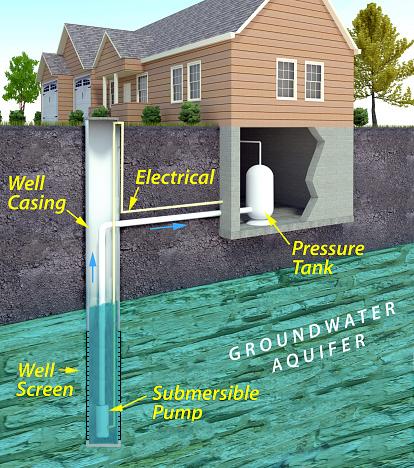 Drilled wells are constructed by percussion or rotary-drilling machines. Drilled wells can be thousands of feet deep and require the installation of casing. Drilled wells have a lower risk of contamination due to their depth and use of continuous casing.
1. Well descriptions adapted from the U.S. Geologic Survey, Groundwater Wells (2016) Well Components
Well component descriptions adapted from the National Ground Water Association (2017) Well Location & Construction Proper well location and construction are key to the safety of your well water. The well should be located so rainwater flows away from it. Rainwater can pick up harmful bacteria and chemicals on the land’s surface. If this water pools near your well, it can seep into it and potentially cause health problems. The Center for Disease Control (CDC) has an excellent web page on well siting. Appropriate well construction depends on local geologic and groundwater conditions. Your state water-well contractor licensing agency, your local health department, or a local water system professional can provide information on proper well construction. The National Ground Water Association (NGWA) provides a guide for hiring a water system professional that covers key considerations. |
